Turn off the water source first, then get the power off in affected areas if outlets or fixtures are near standing water. After that: document everything with photos before you touch anything, remove valuables and furniture from wet areas, and call a restoration company within the first few hours, not the next day. The single biggest mistake homeowners make is waiting to "see how bad it is" before calling anyone. Water damage doesn't pause while you decide. Here's the full sequence and why the clock matters more than most people realize.
Step 1: Stop the Water at the Source
If it's a burst pipe or supply line, shut off the main water valve immediately—don't waste time hunting for the specific fixture valve if you don't already know where it is. If it's coming from outside (storm, grading issue, or sump pump failure), you can't stop the source yourself, which makes fast extraction even more important once the rain stops.
Step 2: Cut Power to Wet Areas
Water and electricity in the same room is a real hazard, not a precaution taken for show. If outlets, appliances, or wiring are anywhere near standing water, shut off power to that circuit or the whole panel if you're unsure which circuit it is. Don't wade into standing water to reach a breaker—call an electrician or wait for a professional if the panel itself is in a flooded area.
Step 3: Document Before You Touch Anything
Photograph and video every affected room, wall, and item before you start moving things or drying anything out. Insurance adjusters work from evidence, not descriptions. This step takes five minutes and can be the difference between a smooth claim and a disputed one.
Step 4: Remove What You Can, Safely
Furniture, rugs, electronics, and anything not bolted down should come out of standing water as soon as it's safe to move. Porous items sitting in water for more than a few hours are often not salvageable, so speed here isn't optional—it's the difference between saving something and replacing it.
Step 5: Call a Restoration Company—Same Day
This is the step people delay, and it's the costliest delay in the entire process. Here's why timing is not just a scheduling preference:
Why the First 24–48 Hours Decide the Outcome
Water restoration standards (IICRC S500) classify water damage into three categories based partly on how long it's been sitting:
- Category 1—clean water (supply line, appliance overflow). Cheapest and fastest to remediate if handled quickly.
- Category 2—water that's been sitting long enough to pick up contaminants. Under the same standard, Category 1 water left untreated for 24–48 hours is presumed to have progressed toward this stage.
- Category 3—grossly contaminated water (sewage backup, or any water left untreated past roughly 72 hours). This category requires different containment, protective equipment, and disposal procedures.
In other words, the same leak gets more expensive and more complicated to fix the longer it sits—not because the restoration company charges more, but because the physical and biological reality of the damage changes.
Mold follows the same clock. The EPA and IICRC both point to the same window: mold can begin germinating within 24 to 48 hours of a surface staying wet, with visible colonies possible within roughly three weeks if the moisture problem isn't resolved. That's the entire justification for same-day response—it's not urgency for its own sake; it's a biological deadline.
The Data Behind Why This Happens So Often
A few numbers worth knowing if you've never dealt with this before:
- Water damage accounts for a large share of all homeowner insurance claims nationally, and it's one of the most common reasons homes need full remodeling work afterward—kitchens and basements especially.
- Burst pipes are the single most common cause of residential water damage, and the large majority of those claims originate in unheated spaces like basements and garages—which describes a lot of finished and unfinished basements around Potomac.
- Claims spike in January and February in this climate, tied directly to freezing pipes.
None of this is meant to alarm you—it's meant to explain why "wait and see" is the wrong instinct, especially in a house with an older basement or plumbing system that hasn't been touched in years.
What Happens During Professional Restoration
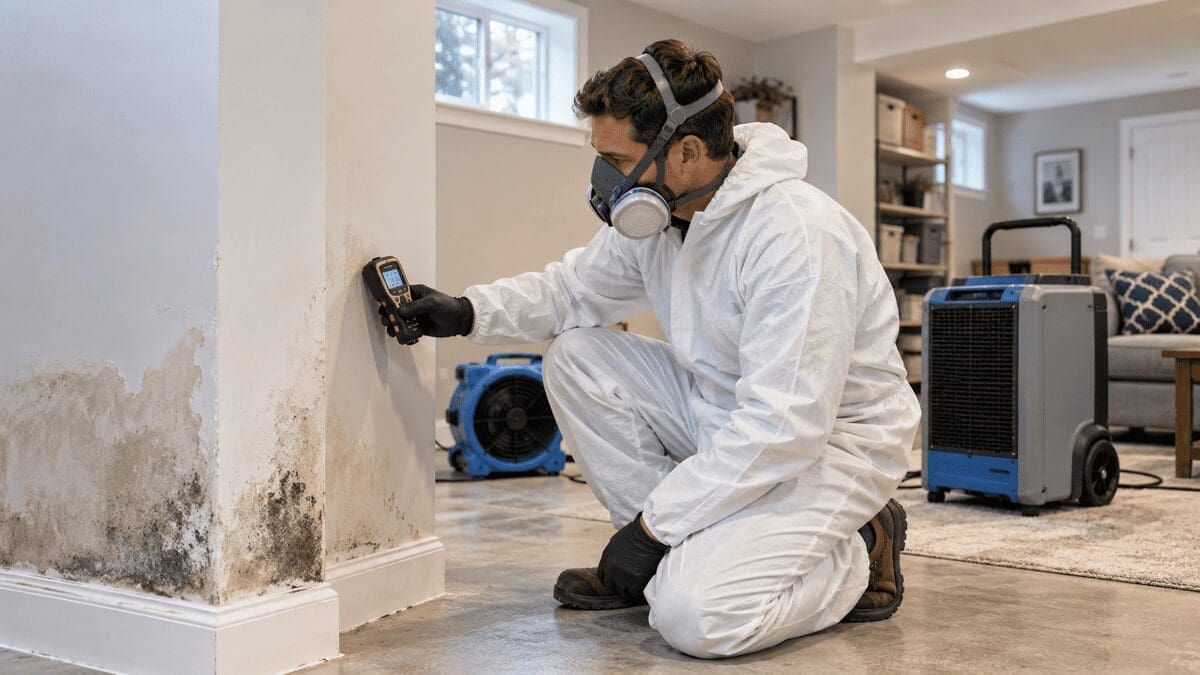
- Assessment and moisture mapping—identifying exactly how far the water traveled, including behind walls and under flooring, not just what's visible.
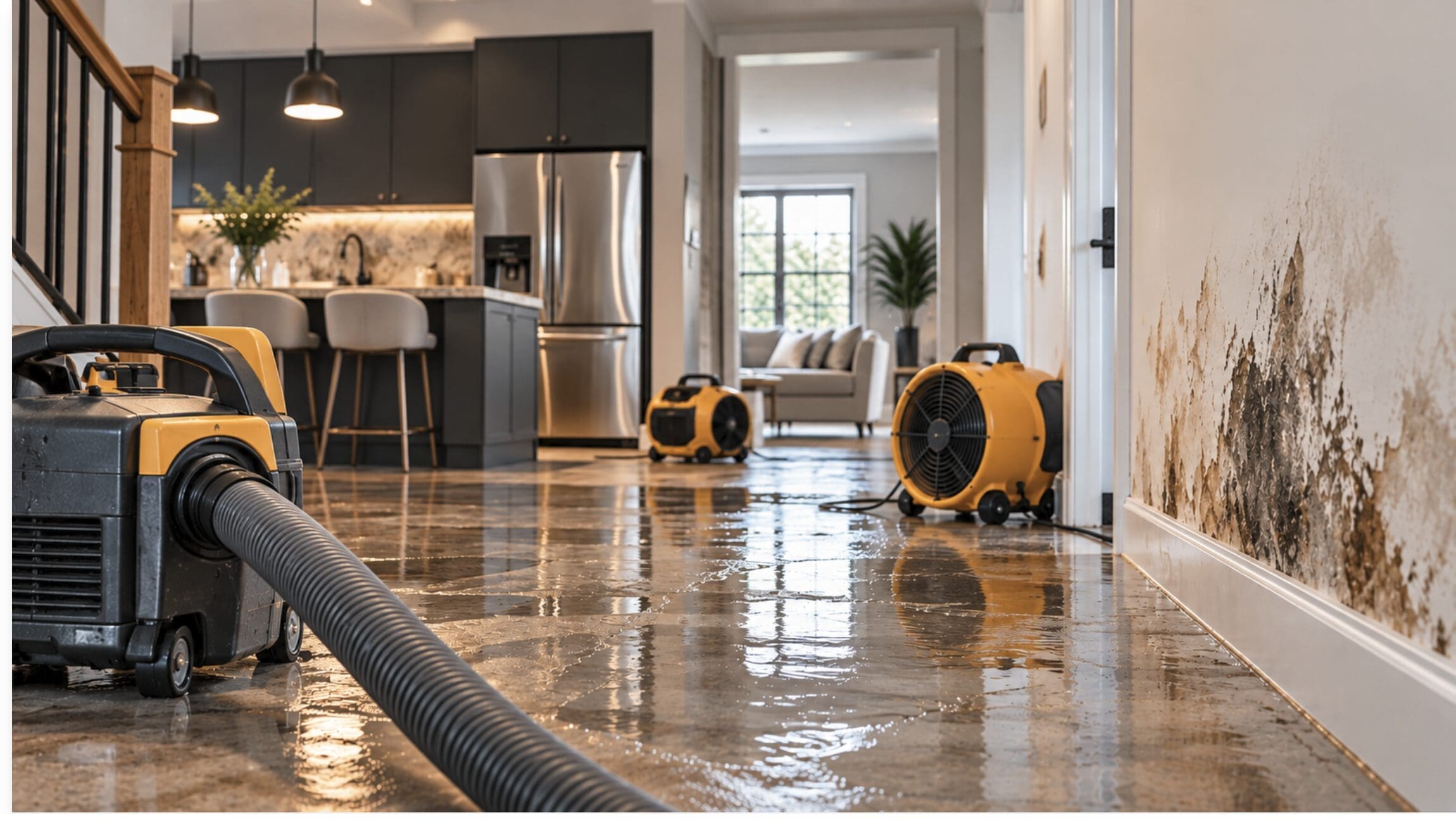
- Extraction—pulling standing water out immediately with pumps and extraction equipment.
- Drying and dehumidification—industrial air movers and dehumidifiers, typically running for several days, monitored with moisture meters rather than guesswork.
- Sanitizing and treating affected materials—especially important once water has moved past Category 1.
- Repair and rebuild—replacing drywall, flooring, subfloor, or cabinetry that couldn't be dried in place.
If the moisture problem isn't fully resolved before this last step, you're rebuilding on top of a problem that will resurface—which is why steps 1–4 aren't optional shortcuts, even when you're anxious to get the room looking normal again.
When Mold Has Already Started
If it's been more than 48–72 hours, or you're already seeing discoloration, a musty smell, or soft drywall, this isn't a straightforward drying job anymore. At that point, you're dealing with a mold remediation situation on top of the original water damage, and it needs to be treated as a separate, more involved process—containment, air filtration, and removal of affected material rather than surface cleaning.
What About Insurance?
Sudden, accidental water damage—a burst pipe, an overflowing appliance—is typically covered by a standard homeowner's policy. Water that has been leaking slowly for weeks or months is often treated as a maintenance issue and may not be. Flooding from an outside source (storm surge, rising groundwater) usually requires separate flood coverage. This is exactly why Step 3 — documenting everything immediately — matters so much: it establishes the timeline your insurer needs to see.
A restoration company that works directly with insurance carriers can make this process considerably less painful than handling it alone.
Why a Local Response Matters
A restoration company based outside the DMV area doesn't know how fast basements around gaithersburg tend to flood after a heavy storm or how common older, unheated crawlspaces are in homes built decades ago in this area. ManyWays LLC is licensed and insured (MHIC #150485), handles emergency calls after hours, and works directly with most insurance companies—so you're dealing with one team from extraction through the final flooring or basement remodeling work, not five separate contractors.
Frequently Asked Questions
How fast do I actually need to call someone?
Same day, ideally within a few hours. The IICRC's own category system is built around a 24–48 hour window before clean water is presumed contaminated, and mold can begin within that same window.
Can I just dry it out myself with fans?
For a small, contained spill, maybe. For anything involving a burst pipe, flooding, or water that reached flooring, insulation, or wall cavities, household fans don't move enough air or pull enough moisture to prevent mold—that requires industrial equipment and moisture monitoring.
Will my insurance cover this?
Usually, if it's sudden and accidental. Document everything immediately, and involve your insurer as soon as you've contacted a restoration company.
What if I already see mold?
That's no longer a pure water damage job. It needs to be treated as mold remediation, which involves containment and material removal rather than just drying.
Do I need permits for water damage repair?
Straightforward drying and material replacement usually doesn't require a permit. If the repair involves electrical, plumbing, or structural work, Montgomery County will require one—a licensed contractor handles this as part of the process.
Get Emergency Help Now
Every hour a wet area sits untreated makes the job bigger. If you're dealing with water damage right now, don't wait for a callback window.
ManyWays LLC—Licensed & Insured (MHIC #150485) 📞 (301) 605-2296
24/7, emergency calls answered after 8 PM ✉️ sales@mwhi.net 📍 802 Flagler Dr. Gaithersburg, MD 20878
Turn Your Basement Into a Space You’ll Love
A well-designed basement can add valuable living space to your home. From cozy family rooms to modern home offices or entertainment areas, smart basement remodeling ideas help maximize functionality, comfort, and style while increasing your home’s overall value.