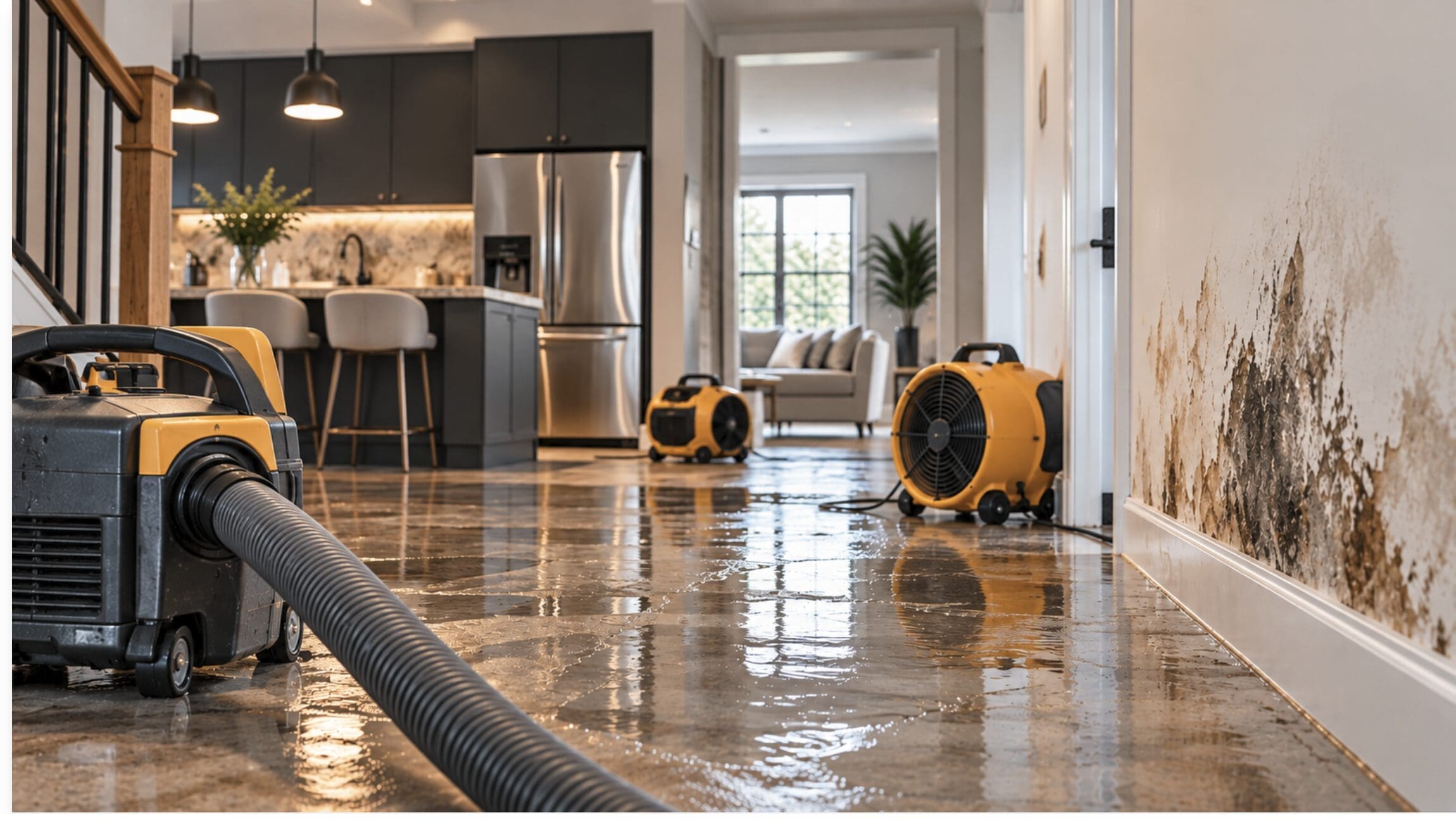
A leaking pipe, overflowing appliance, roof leak, or flooded basement can leave more than visible water behind. Moisture can seep into drywall, insulation, flooring, cabinets, and other porous materials. If these areas do not dry properly, mold may begin growing in places that are difficult to see.
For Gaithersburg property owners, responding quickly means addressing both parts of the problem: the mold and the moisture source that allowed it to grow. Cleaning the visible surface alone may not provide a lasting solution.
What Should You Do If You Find Mold or Water Damage?
Stop the water source if you can do so safely, keep people away from the affected area, and avoid disturbing visible mold. Photograph the damage, contact your insurance provider when appropriate, and arrange a professional moisture assessment. Mold removal should include correcting the underlying moisture problem—not simply cleaning or painting over visible growth.
Why Mold Problems Often Begin With Water Damage
If a leak, flood, or appliance failure has left building materials wet, professional water restoration and mitigation services in Gaithersburg can help address standing water and trapped moisture before the damage spreads. Early moisture control may also reduce the likelihood of additional damage to drywall, flooring, insulation, and nearby rooms.
Common sources of moisture in Gaithersburg homes include:
- Leaking plumbing fixtures or supply lines
- Water heater or appliance failures
- Basement seepage
- Roof and flashing leaks
- Poor drainage near the foundation
- Condensation around HVAC equipment
- Storm-related water intrusion
- Overflowing sinks, tubs, or toilets
- High humidity in poorly ventilated areas
The Centers for Disease Control and Prevention recommends fixing leaks and drying wet areas as quickly as possible, generally within 24–48 hours. However, this time frame is not a guarantee that mold will or will not develop. Temperature, humidity, airflow, material type, and the length of exposure can all affect the outcome.
Warning Signs That May Require Professional Attention
Mold is not always visible. Moisture can remain behind walls, underneath flooring, inside cabinets, or above ceilings after the surface appears dry.
Watch for signs such as
- A persistent musty or earthy odor
- Dark, green, white, or discolored patches
- Peeling paint or bubbling wallpaper
- Soft, swollen, or crumbling drywall
- Warped flooring or baseboards
- Staining on ceilings and walls
- Condensation that repeatedly returns
- Damp carpet or padding
- Mold that comes back after cleaning
- Previous water damage that was never professionally dried
What to Do Immediately After Finding Water Damage
Your first actions can affect how far the damage spreads.
1. Protect People in the Property
Keep children, pets, and vulnerable occupants away from affected rooms. Do not enter an area with sagging ceilings, contaminated water, exposed wiring, or other structural or electrical hazards.
If water is near electrical outlets, panels, or appliances, do not touch the water or electrical equipment. Contact an appropriate professional.
2. Stop the Water Source
If the problem involves a supply line or plumbing leak, shut off the relevant fixture or the property’s main water supply when it is safe to do so.
Roof leaks, foundation seepage, sewage backups, and stormwater intrusion may require specialized help. Controlling the source is essential before restoration can be completed.
3. Document the Damage
Take photographs and videos before moving or discarding materials, provided it is safe to enter the area. Documentation may be useful when discussing the loss with your insurance company.
Avoid throwing away damaged items until you have reviewed the situation with your insurer or restoration provider, unless the items create an immediate safety concern.
4. Remove Standing Water Safely
Minor clean-water spills may sometimes be handled with towels or a wet vacuum. Larger losses, contaminated water, sewage, or water near electricity require professional attention.
5. Begin Drying the Area
Air movement and dehumidification may help with small, clean-water incidents. However, household fans should not be used around visible mold because airflow may spread spores and contaminated dust into unaffected areas.
What Not to Do When You Find Mold
A quick surface cleanup can make the problem look smaller without correcting it.
Avoid these common mistakes:
- Painting or caulking over visible mold
- Spraying bleach on every affected material
- Sanding or scraping mold without containment
- Pointing household fans at visible growth
- Removing large sections of drywall without protective measures
- Assuming a dry-looking surface is completely dry
- Reinstalling flooring before the subfloor has been checked
- Ignoring the leak or humidity problem
- Mixing household cleaning chemicals
The EPA’s mold cleanup guidance explains that moldy porous materials may be difficult or impossible to clean completely. The correct approach depends on the material, the amount of growth, the moisture source, and the possibility of contaminated water.
What Professional Mold Removal in Gaithersburg May Include
When moisture has already contributed to visible growth or a persistent musty odor, mold remediation in Gaithersburg, Maryland, may involve inspecting affected materials, establishing appropriate containment, addressing contaminated areas, and correcting the underlying moisture problem.
Identifying the Moisture Source
The first step is determining why the area became damp. Removing affected material without correcting a plumbing leak, drainage problem, or humidity issue can allow mold to return.
Inspecting the Affected Areas
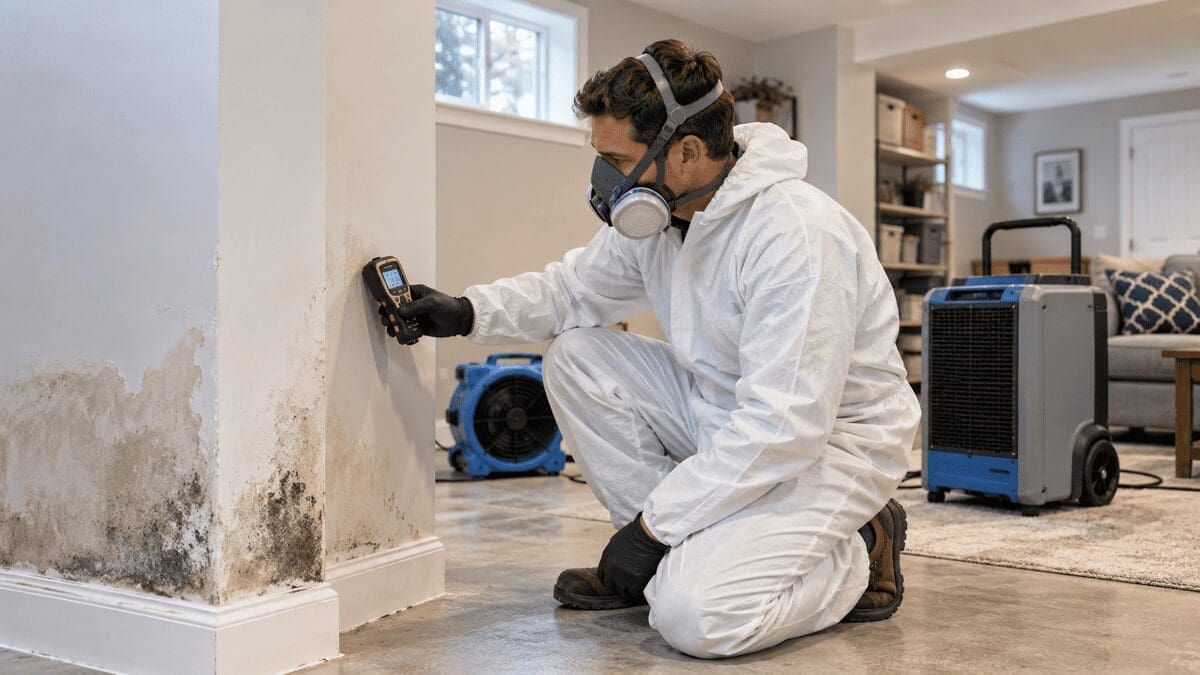
Professionals may use moisture meters and other tools to evaluate drywall, flooring, framing, and nearby materials. The goal is to understand the extent of the moisture, including areas that may not be visibly wet.
Mold testing is not automatically necessary in every situation. When visible mold is present, remediation may be more important than determining the exact species. Testing may be appropriate when the source is unclear, occupants have specific concerns, or independent documentation is required.
Establishing Containment
Containment helps reduce the movement of dust and mold particles into unaffected areas. The type of containment depends on the size and location of the affected space.
Air-control equipment may also be used when appropriate, but the exact setup should be based on the conditions found during the inspection.
Removing or Cleaning Affected Materials
Some nonporous materials may be cleaned and dried. Porous materials—including certain drywall, insulation, carpet padding, and ceiling tiles—may require removal when contamination is extensive or cleaning is not practical.
Material should not be removed solely because it became wet. Its condition, cleanliness, structural integrity, and ability to dry must all be considered.
Drying and Monitoring the Structure
Water extraction is only one part of the process. Remaining moisture may need to be addressed through controlled air movement, dehumidification, and regular moisture measurements.
Drying should be based on readings and material conditions rather than appearance alone.
Repairing the Affected Area
Once contaminated materials have been handled and the structure is acceptably dry, repairs can begin. Depending on the loss, this might include replacing drywall, insulation, flooring, trim, cabinets, or finishes.
Mold Removal vs. Water Damage Restoration
Property owners who need a broader explanation of both processes can review ManyWays LLC’s water restoration and mitigation services in Maryland. This resource explains how water removal, drying, damage control, and property restoration work together after a leak or flood
| Service | Main Purpose |
| Water mitigation | Stops or limits ongoing water damage |
| Water extraction | Removes standing or trapped water |
| Structural drying | Reduces moisture in building materials |
| Mold remediation | Removes or manages mold-affected materials under controlled conditions |
| Restoration | Repairs and rebuilds damaged areas |
A complete response may require more than one service. For example, a burst pipe could require extraction, structural drying, mold remediation, and reconstruction.
Property owners searching for water damage restoration in Gaithersburg should ask whether the provider can manage both the moisture problem and the necessary repairs. Coordinating these stages can help prevent gaps between cleanup and reconstruction.
What Affects Mold-Removal Costs?
The cost of mold removal in Gaithersburg depends on the actual scope of work. A responsible estimate should be based on an inspection rather than a generic online price.
Major cost factors include:
- Size of the affected area
- Accessibility of the damage
- Type of affected materials
- Need for containment
- Required demolition and disposal
- Water extraction and drying needs
- Repairs or reconstruction
- Testing, when appropriate
- Damage to personal belongings
- Cause of the moisture problem
A lower estimate is not necessarily a better value if it excludes moisture correction, proper containment, drying, or repairs.
How to Help Prevent Mold From Returning
Mold prevention is primarily moisture control. After cleanup and restoration, focus on the conditions that caused the problem.
Helpful steps include:
- Repair plumbing and roof leaks promptly.
- Keep gutters and downspouts clear.
- Direct water away from the foundation.
- Use bathroom and kitchen exhaust fans.
- Maintain appropriate indoor humidity.
- Inspect basements after heavy rainfall.
- Check underneath sinks and around appliances.
- Maintain HVAC and condensate-drain systems.
- Dry spills and wet materials promptly.
- Monitor previously affected areas for returning odors or stains.
The EPA recommends controlling moisture as the central step in preventing indoor mold growth.
Frequently Asked Questions
Have additional questions about cleanup, repairs, or rebuilding? Review the company’s remodeling and restoration FAQs for more information about the restoration process.
How quickly can mold develop after water damage?
Mold can begin developing when wet materials remain damp, which is why the CDC recommends drying affected areas within approximately 24–48 hours. Actual growth depends on humidity, temperature, airflow, and the type of material involved.
Can I remove mold myself?
Small areas on cleanable surfaces may sometimes be handled by the property owner with appropriate precautions. Larger areas, recurring mold, contaminated water, HVAC involvement, or concealed damage generally require professional evaluation.
Is mold removal the same as mold remediation?
Not exactly. “Mold removal” is commonly used by property owners, but remediation is a broader process. It may include containment, removing affected materials, cleaning, drying, correcting moisture conditions, and reducing the risk of cross-contamination.
Does mold always need to be tested?
No. If mold is clearly visible, testing may not change the cleanup plan. Testing may be useful when the source is uncertain, no growth is visible, documentation is required, or an independent professional recommends it for a specific reason.
Can water-damaged drywall be saved?
Minor exposure to clean water may not always require replacement if the drywall can be dried promptly and remains structurally sound. Saturated, crumbling, contaminated, or mold-affected drywall may need removal.
Get Help With Mold and Water Damage in Gaithersburg.
ManyWays LLC provides mold remediation services in Gaithersburg along with water restoration and mitigation services. If your home has experienced a leak, flood, or persistent moisture problem, contact the team to arrange an assessment and discuss the appropriate next steps.
Turn Your Basement Into a Space You’ll Love
A well-designed basement can add valuable living space to your home. From cozy family rooms to modern home offices or entertainment areas, smart basement remodeling ideas help maximize functionality, comfort, and style while increasing your home’s overall value.