By ManyWays LLC, MHIC #150485
We'll be straight with you. Some mold problems you can handle yourself, and we'd rather tell you that than sell you a job you don't need.
Others are bigger than they look, and a DIY cleanup can make them worse. The trick is knowing which one you have.
The 10-square-foot rule of thumb
The EPA's guidance says that people can usually deal with a mold patch smaller than about 10 square feet on their own. That's roughly a 3-foot by 3-foot area, about the size of a bath towel hung on the wall.
That number is a guide, not a law. Other things matter as much as size.
When DIY usually makes sense
All of these should be true:
- The mold is small, under about 10 square feet.
- It's on a hard, non-porous surface, like tile, glass, metal, sealed countertops, or a painted hard surface.
- You know the cause, and it's fixed, like a bathroom with poor ventilation or condensation on a window.
- The area is dry now and not wet from an active leak.
- No one in the home has asthma, a weak immune system, or a lung condition that could make exposure risky.
A classic example is the dark film in a shower corner or on a window sill.
Ready for a second opinion?
Call (301) 605-2296 or request a free estimate.
How to clean small mold safely
- Protect yourself.Protect yourself. Wear an N95 mask, rubber gloves, and goggles. Open a window if you can.
- Use detergent and water. Scrub the surface with a brush and soapy water. The EPA doesn't recommend bleach as a routine fix, and it works poorly on porous materials.
- Never mix cleaning products. Mixing bleach with ammonia makes toxic fumes.
- Wipe, then dry completely. Moisture left behind lets it come back.
What not to do
- Don't paint or caulk over mold. It will keep growing underneath.
- Don't dry-brush or sand it. That puts spores in the air.
- Don't use a fan to blow on it.
- Don't try to clean mold off drywall, ceiling tiles, or carpet. These soak it up, and cleaning the surface doesn't remove it.
When to call a professional
Get help if any of these are true:
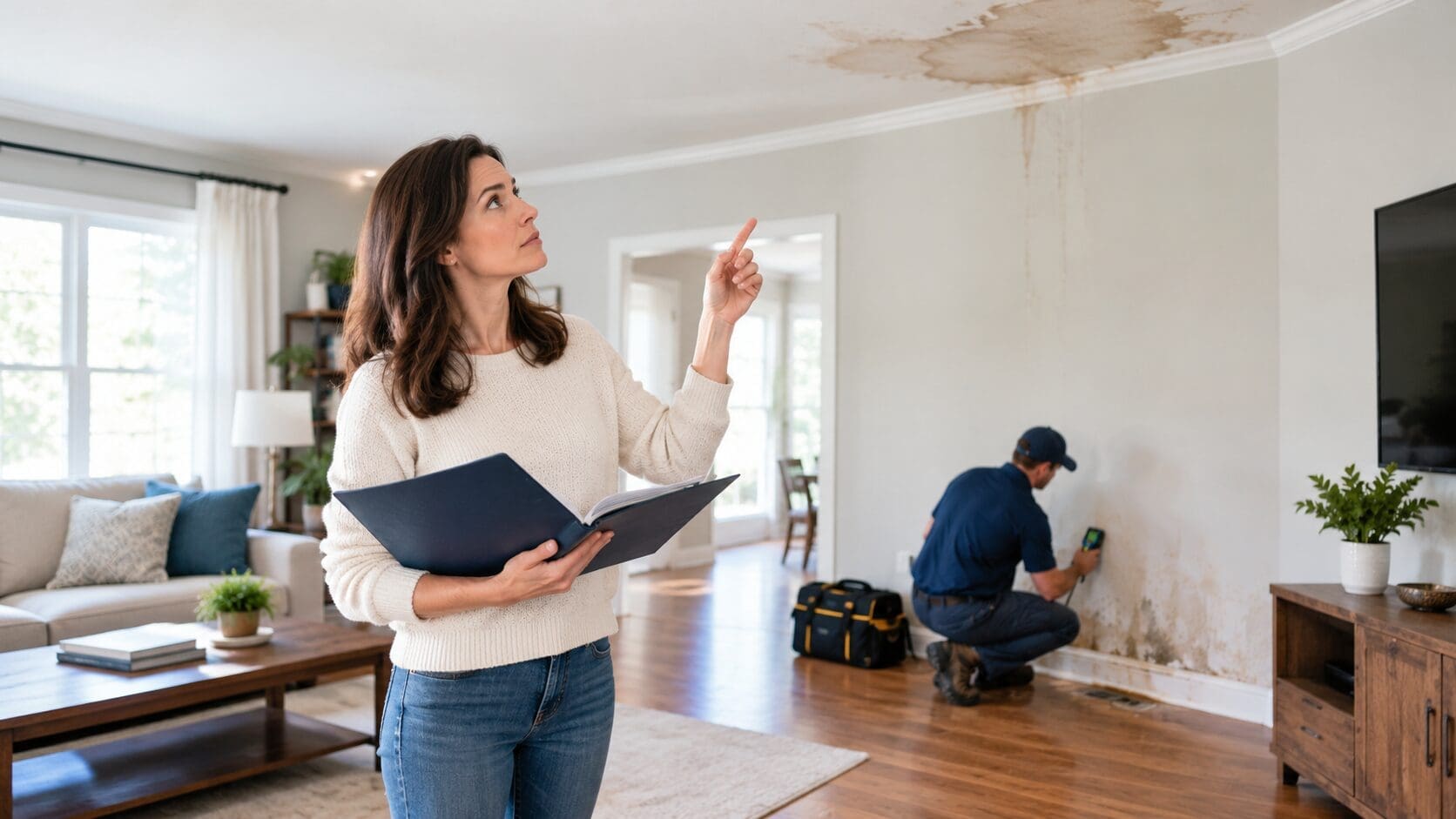
- It's on porous materials, such as drywall, insulation, carpet, padding, or ceiling tiles. These usually need to be removed.
- It's larger than about 10 square feet, or it keeps coming back after cleaning.
- It came from a flood, a sewage backup, or a long leak. Contaminated water is a different problem. See our first. First 24-hour checklist
- You smell mold but can't find it. It may be inside a wall, under a floor, or in the ductwork.
- The HVAC system may be affected. Spores can spread to every room.
- The HVAC system may be affected. including babies, older adults, and people with asthma, allergies, or weakened immune systems.
- The water source is still unknown.
If your problem started with water damage, read our guide on how fast mold grows after water damage. The sooner you act, the smaller the job.
What a professional does differently
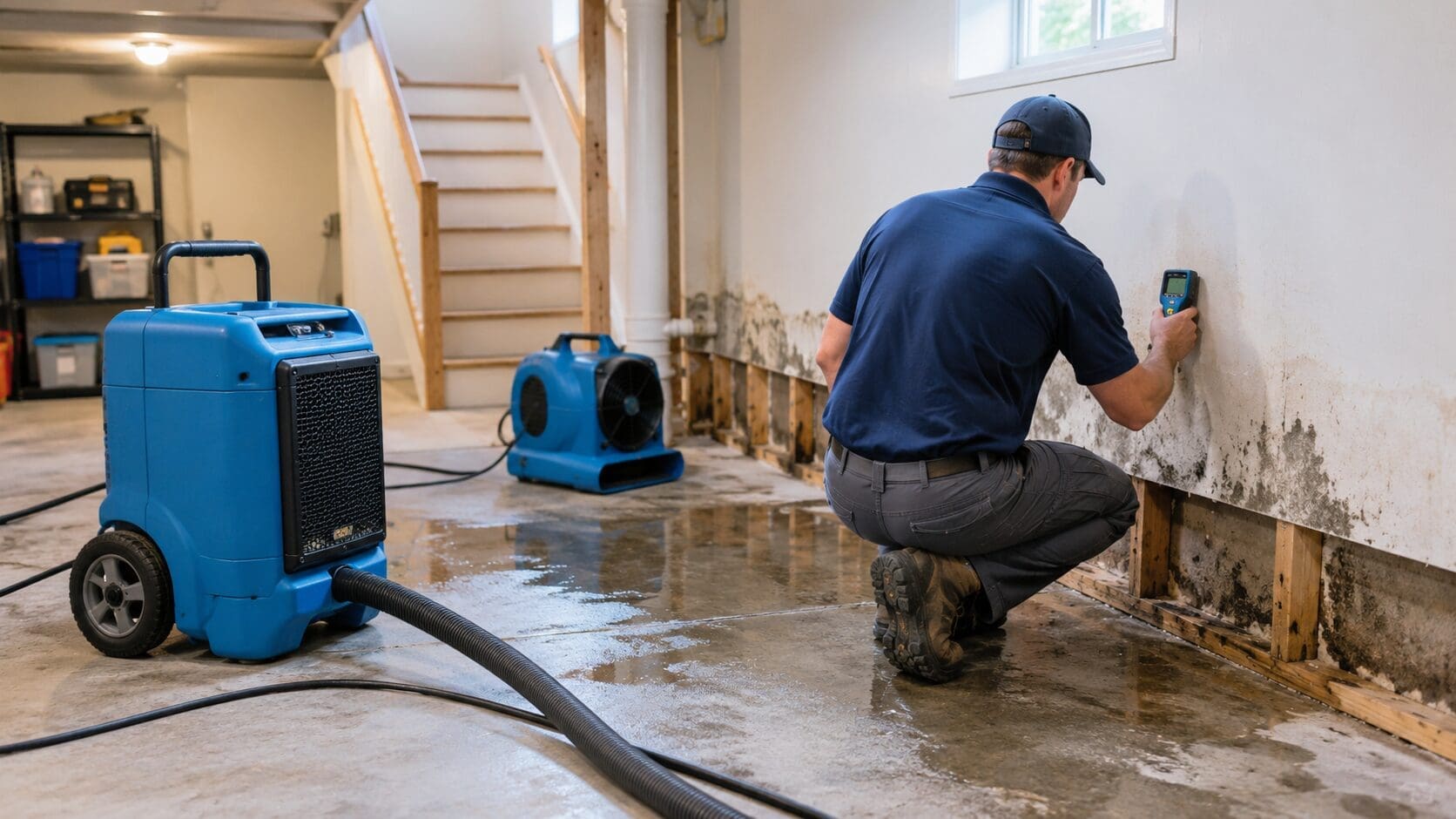
The difference is containment and proof. We seal off the work area, use air machines to keep spores from traveling, remove the contaminated materials, clean the rest, dry the structure, and verify the result. We cover each step in mold inspection, testing, and remediation.
We don't decide whether your claim is approved. Only your insurer does. What we can do is make sure the paperwork shows what really happened.
You can see the full process on our mold remediation page and some of our past work on our projects page.
FAQs
Does vinegar kill mold?
Vinegar can work on some hard surfaces, but detergent and water with a good scrub is usually enough for small spots. It isn't a fix for mold inside walls.
Is black mold always dangerous?
You can't tell what type of mold you have by color. Treat all mold seriously and fix the moisture.
Can I just keep a dehumidifier running?
It helps prevent new growth, but it doesn't remove mold that's already there.
Not sure which one you have?
That's okay. Send us photos, or ask for an inspection. If it's a small DIY job, we'll tell you. If it needs a proper cleanup, we'll show you why and give you a written estimate.